


Fashion history is punctuated by those rare moments when a single designer's vision becomes so powerful that it shifts the entire industry's trajectory. These are the revolutionaries who looked at the status quo and said, "Non." From liberating women from corsets to making luxury accessible, these five designers didn't just create beautiful garments—they fundamentally altered how we think about fashion, femininity, and self-expression.
Coco Chanel: The Liberation of Modern Women
"Fashion fades, but style is eternal."
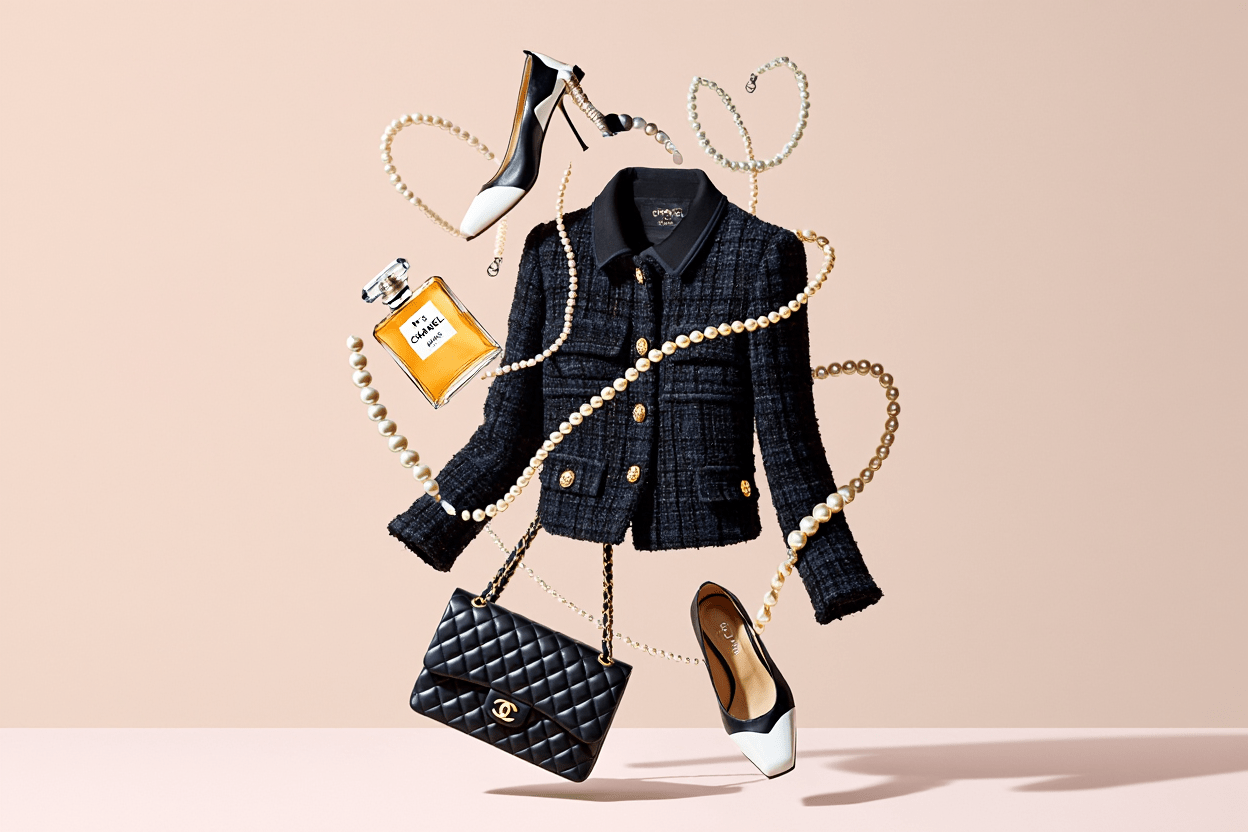
Gabrielle "Coco" Chanel didn't just design clothes; she designed freedom. In an era when women were corseted into submission, Chanel championed comfort without sacrificing elegance. Her jersey knits moved with the body rather than against it, her little black dress became the ultimate equalizer, and her boyish aesthetic challenged every preconceived notion about feminine dress.
The Chanel suit, with its boxy jacket and knee-length skirt, became the uniform of the modern working woman. More revolutionary still was her decision to appropriate elements of men's wardrobes—trousers, blazers, and simple lines—transforming them into statements of female empowerment. Chanel No. 5, launched in 1921, proved that a designer's vision could extend far beyond fabric, creating an entire lifestyle brand that endures nearly a century later.
Her influence runs deeper than hemlines and silhouettes. Chanel democratized luxury, proving that true elegance didn't require elaborate ornamentation. In doing so, she laid the groundwork for modern minimalism and paved the way for every designer who has since championed the philosophy that less can indeed be more.
Christian Dior: The Master of Reinvention
"Simplicity, good taste, and grooming are the three fundamentals of good dressing."
When Christian Dior unveiled his first collection in 1947, the fashion world collectively gasped. His "New Look"—with its cinched waists, full skirts, and unabashedly feminine silhouettes—was a radical departure from the practical, utilitarian styles that had dominated the war years. In one collection, Dior single-handedly restored glamour to fashion.
But Dior's true genius lay in understanding that fashion needed to evolve constantly. He introduced themed collections—the A-line, the H-line, the Y-line—each season bringing a new vision of femininity. This concept of seasonal reinvention became the backbone of the modern fashion industry, establishing the rhythm of anticipation and renewal that still drives fashion weeks today.
The House of Dior's influence extends beyond its founder's lifetime. The brand's ability to reinvent itself while maintaining its DNA of elegance and craftsmanship has made it a template for luxury fashion houses worldwide. From John Galliano's theatrical romanticism to Maria Grazia Chiuri's feminist modernism, Dior continues to prove that great fashion houses are built on evolution, not stagnation.
Yves Saint Laurent: The Democratization of Haute Couture
"I have always believed that fashion was not only to make women more beautiful, but also to reassure them, give them confidence."
Yves Saint Laurent understood something his predecessors missed: haute couture's future lay in its accessibility. When he opened the first Rive Gauche boutique in 1966, he wasn't just selling ready-to-wear—he was democratizing luxury. Suddenly, the sophisticated Parisian aesthetic wasn't reserved for the ultra-wealthy; it was available to any woman with style and ambition.
Saint Laurent's Le Smoking tuxedo suit for women, introduced in 1966, was perhaps fashion's most powerful statement about gender equality. By putting women in menswear-inspired suits, he wasn't just creating clothes—he was creating possibilities. The smoking jacket became a symbol of female empowerment, worn by everyone from Catherine Deneuve to Bianca Jagger.
His influence on contemporary fashion cannot be overstated. Saint Laurent proved that high fashion could be both aspirational and attainable, establishing the ready-to-wear market that now drives the entire industry. Every diffusion line, every designer collaboration with mass retailers, every accessible luxury brand owes a debt to Saint Laurent's revolutionary vision.
Rei Kawakubo: The Deconstruction of Beauty
"I work in three shades of black."
When Rei Kawakubo presented her first Paris collection in 1981, the fashion establishment was bewildered. Her deliberately distressed fabrics, asymmetrical cuts, and predominantly black palette seemed to reject every conventional notion of beauty and femininity. Critics called it "post-Hiroshima chic," but Kawakubo was crafting something far more profound: a complete reimagining of what fashion could be.
Through Comme des Garçons, Kawakubo challenged the very foundations of fashion design. Her clothes often obscured rather than flattered the body, prioritizing concept over commerce. Her influence spawned an entire movement of conceptual designers who viewed fashion as art, philosophy, and social commentary rolled into one.
Kawakubo's impact extends far beyond the avant-garde. Her deconstructionist approach influenced mainstream designers to experiment with proportions, textures, and the very definition of wearability. She proved that fashion could be intellectual, challenging, and still profoundly moving—opening doors for designers like Martin Margiela, Issey Miyake, and countless others who view clothing as a medium for artistic expression.
Giorgio Armani: The Architect of Modern Menswear
"Elegance is not about being noticed, it's about being remembered."
Giorgio Armani didn't just design suits; he redesigned masculinity itself. When he launched his menswear line in 1975, followed by women's wear in 1975, he stripped away the rigid structure of traditional tailoring, creating clothes that moved with natural grace. His soft-shouldered jackets and fluid silhouettes redefined power dressing for a new generation.
Armani's influence on both Hollywood and Wall Street cannot be understated. When Richard Gere wore Armani in "American Gigolo," the designer became synonymous with sophisticated masculinity. His clothes suggested power through understatement rather than ostentation—a philosophy that revolutionized men's fashion and influenced women's professional wear equally.
The Armani empire—spanning from haute couture to accessible lines—created the blueprint for modern luxury conglomerates. His understanding that different market segments could coexist under one brand umbrella while maintaining design integrity influenced everyone from Calvin Klein to contemporary fast-fashion retailers.
The Legacy Lives On
These five designers didn't just create beautiful clothes—they created new ways of thinking about identity, power, and self-expression through fashion. Their innovations continue to ripple through contemporary design, from the minimalist aesthetics that dominate Instagram to the gender-fluid clothing filling today's runways.
In an industry often criticized for its superficiality, these designers proved that fashion can be a force for social change, personal liberation, and artistic expression. They remind us that at its best, fashion isn't just about what we wear—it's about who we choose to become.


